

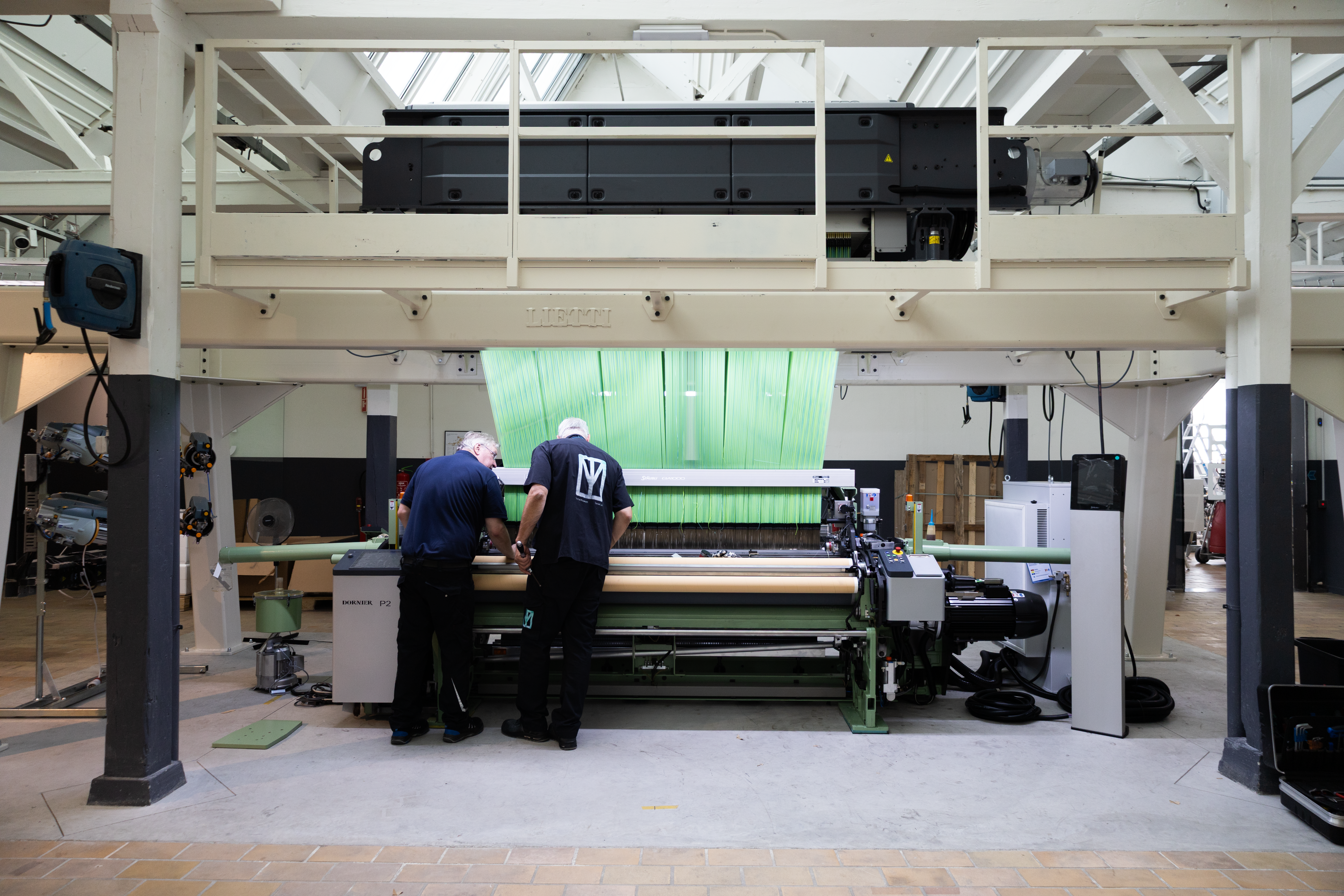
A new innovative weaving machine at the TextielLab: “This opens up exciting new possibilities”
23 July 2026
At the TextielLab, work is constantly underway – and not only on textile products. The lab is preparing for the arrival of an innovative, computer-controlled weaving machine that will make artists and designers eager to experiment. What will happen in the coming months, and when will the new machine become operational? We spoke with colleagues Michel and Gerard.
“A weaving machine is not like a car that you can simply get into and drive away. Getting a machine like this up and running requires a lot of work.” These are the words of Michel Leermakers, weaving textile specialist and weaving mentor at the TextielLab. Together with the TextielLab’s technical team, he has been preparing for the arrival of the new machine for months.
Gerard Kuijpers, Manager of Technology & Operations at the TextielLab, is part of this process. He oversees the planning – a complex task. Gerard explains: “To give an example: the complete installation will consist of a weaving machine and a jacquard head. Both will arrive at the TextielLab by lorry. For this, we depend on both the manufacturer and the transport company. We are also working with a logistics company to move the machine and the jacquard head into the lab using a large forklift. These components are big and heavy, and we simply do not have the necessary equipment ourselves.”
In short: there are many dependencies. If a delay occurs somewhere in the process, it affects all the following steps. Gerard: “Imagine the jacquard head arrives slightly later than planned. I then have to contact the logistics company to ask whether they can also adjust their schedule.” He continues with a smile: “My role is to make sure all the different steps continue to connect and that everyone involved stays on board – both within the museum and beyond.”
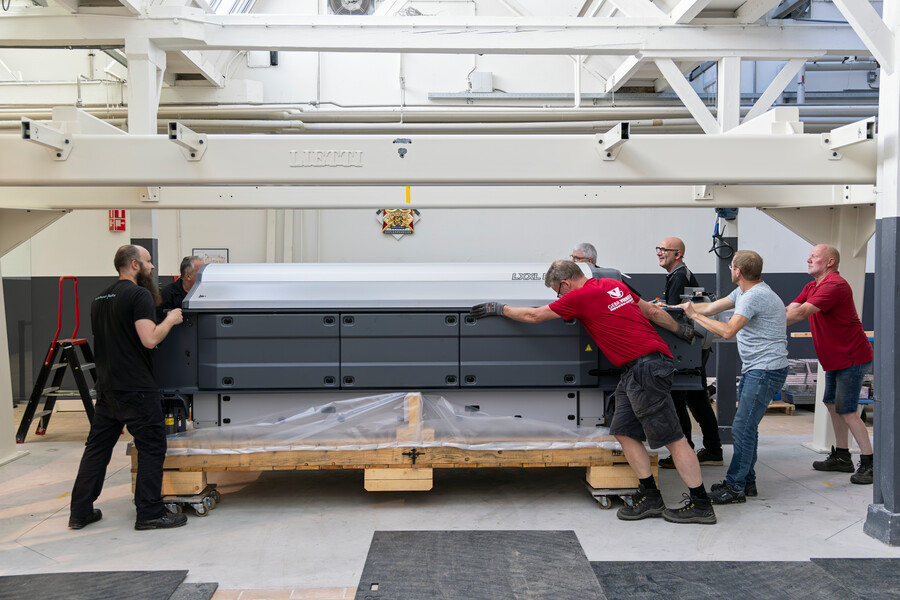
Photo by Josefina Eikenaar
A dream come true for textile professionals
The process of acquiring a new computer-controlled weaving machine started some time ago. The first step was selecting the right type of machine. Ultimately, the choice was made for a mechanical loom measuring 2.2 metres wide, with a weaving width of two metres.
Gerard explains: “We currently have an assembly department where large-scale works are joined together. With this new machine, that will no longer be necessary – or will only be needed much less often.”
Another important advantage is that clients, such as artists and designers, will soon be able to create even more intricate textiles than is possible on the existing machines. Michel explains: “On our other weaving machines, the warp contains 36 threads per centimetre. With this machine, that will be 72 threads per centimetre – twice as many.”
Ultimately, this means that a total of 14,400 warp threads will run from the jacquard head to the weaving machine – an impressive number. Michel: “This is something our clients are really excited about. It will allow them to introduce much more depth, layering and variation into their work.”
Setting up the machine: a highly specialised process
Over the past months, the TextielLab has been prepared for the arrival of the new weaving machine. Machines were moved, and the old factory floor was reinforced. The location where the new machine will stand now has a smooth grey concrete floor. Between the concrete and the tiled floor is a very thin layer of transparent insulation material.
Gerard explains: “This is to reduce the enormous vibrations caused by the weaving machine. Vibrations are not ideal for our employees, visitors or the building itself. Thanks to this layer, the machine will essentially stand on its own ‘island’, which significantly reduces the vibrations.”
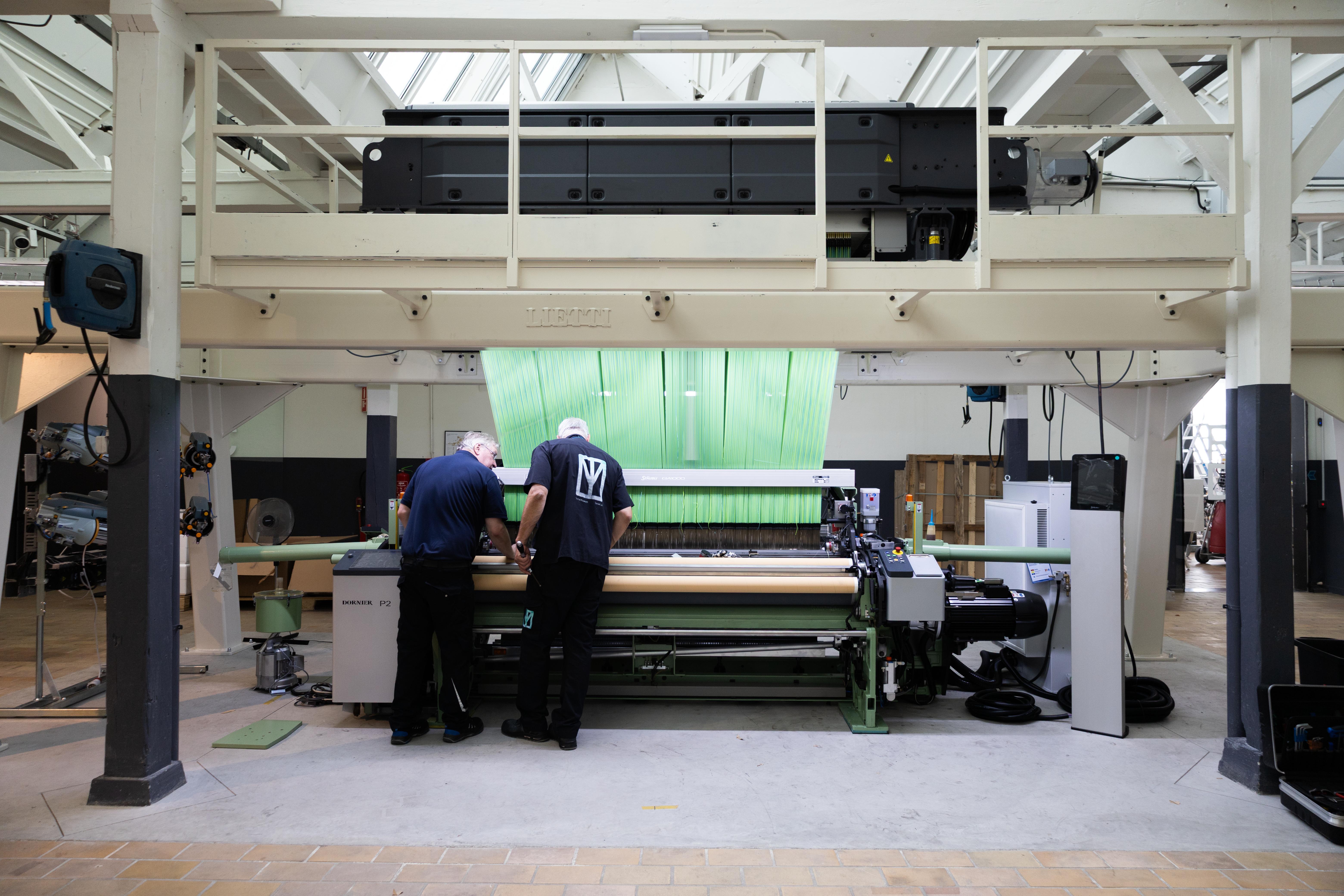
The next step was installing the frame that supports the jacquard head. This frame will connect the head to the weaving machine below via the ‘harness’ – the complete system of warp threads that determines the pattern of the textile.
You might think: place the jacquard head on top, position the weaving machine underneath, and start weaving. But it is far more complex than that.
Michel explains: “Setting up and calibrating the weaving machine and jacquard head is highly specialised work. The technicians from both manufacturers – in this case Dornier and Stäubli – will need considerable time to complete this process. Just think about those 14,400 warp threads. Every single thread must be inserted individually and positioned precisely. The tolerances are incredibly small. And this is just one example of everything that needs to happen before a weaving machine like this is fully operational.”
The great process of experimentation
The weaving machine is expected to be installed and fully operational sometime during the summer. Michel: “That is when the real experimentation begins. What can we create with this machine? How does it perform with the yarns we have selected? Does the machine do exactly what it should, and do we encounter any unexpected issues?”
If everything goes according to plan, artists will be able to work with the new weaving machine from September onwards, together with the TextielLab’s product specialists.
Gerard adds: “Installing a machine like this is not something you do every day – fortunately. But it will be incredibly rewarding when everything is working. We will look back on this intensive process with a great sense of pride.”
Written by Iris van den Boezem
Stay tuned
Where designers collaborate on innovation, there is a lot of news to get. Subscribe to the newsletter and get automatic updates on special projects, discoveries, events and open calls.
Share with friends