

“I’ve never seen my work as ‘decolonial’; I don’t frame it that way,” Ayo says. “But I now think that it actually is.” She is resolute about the Indonesian batiks that, through Dutch commercial enterprise, became part of African culture: “I don’t see Dutch batik prints as a symbol of my African identity.” For her, it is about restoring the connection with the Indigenous makers who were literally written out of the books. “Let’s be aware of what we lose when we prioritise personal gain over relationships.” That became the theme of her collection piece, which she began after completing the collaborative research project.
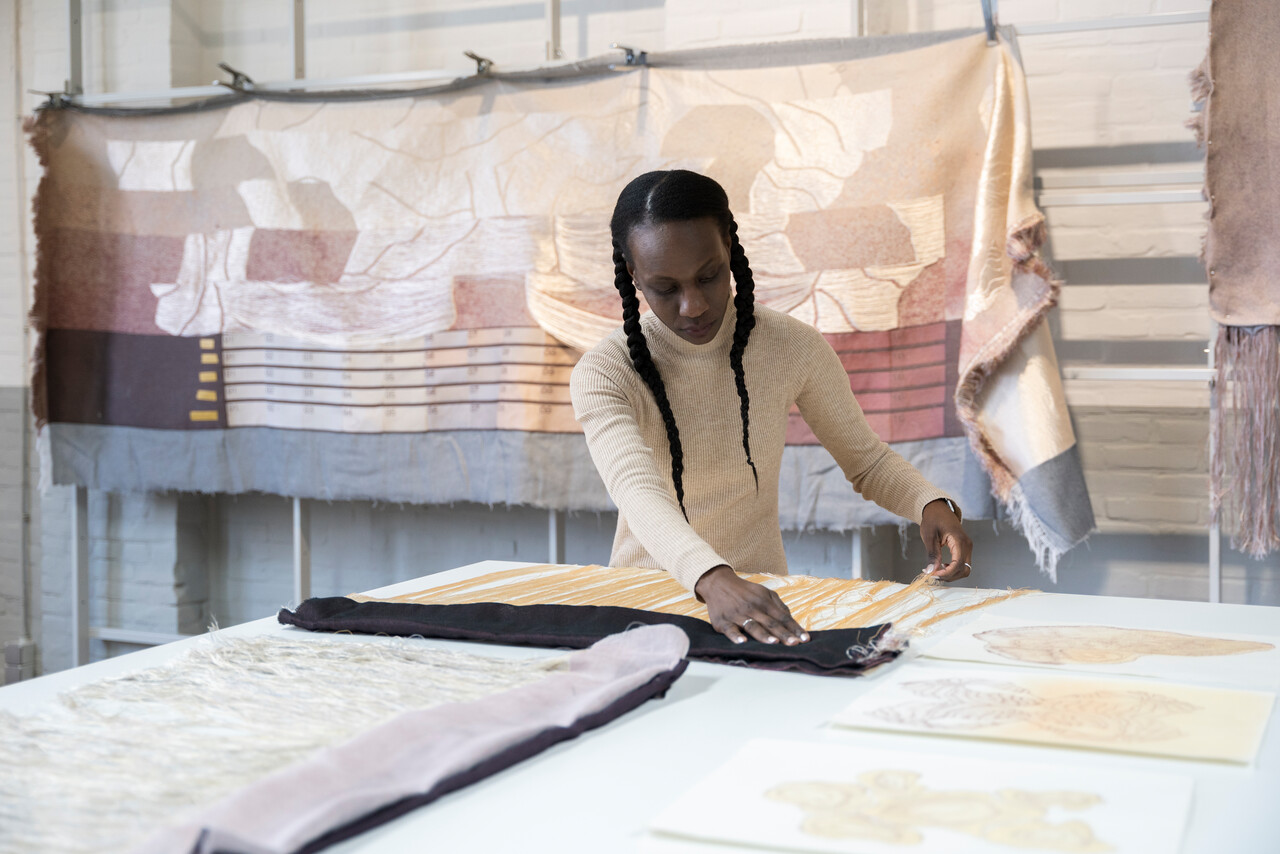
Ayo weaves African trade history into a decolonial artwork
10 December 2025
Christine Ayo is one of three artists invited in 2024 to research the historical museum collection of the Leidsche Katoenmaatschappij. She connected this to her own Ugandan roots and created a new collection piece about extraction and appropriation.
Ayo grew up in Kampala, the capital of Uganda, which she left around the age of 20. She settled in the Netherlands, studied for a year at ArtEZ in Arnhem, and then graduated cum laude with a master’s degree from the Piet Zwart Institute in Rotterdam. After several artist residencies in New York and Marseille, she is now one of the residents at the Rijksakademie van beeldende kunsten in Amsterdam.
The body as archive
She is a multidisciplinary artist, combining sculptures made of all kinds of materials with film, sound, and performance. “I love performance because it brings up memories and feelings that I can’t express in words,” Ayo says. “I see the body as an archive in which all sorts of things are stored without you even realising it. Sometimes you think you’ve forgotten things, but your body is an enormous source of information. You just have to find a way to access it.”
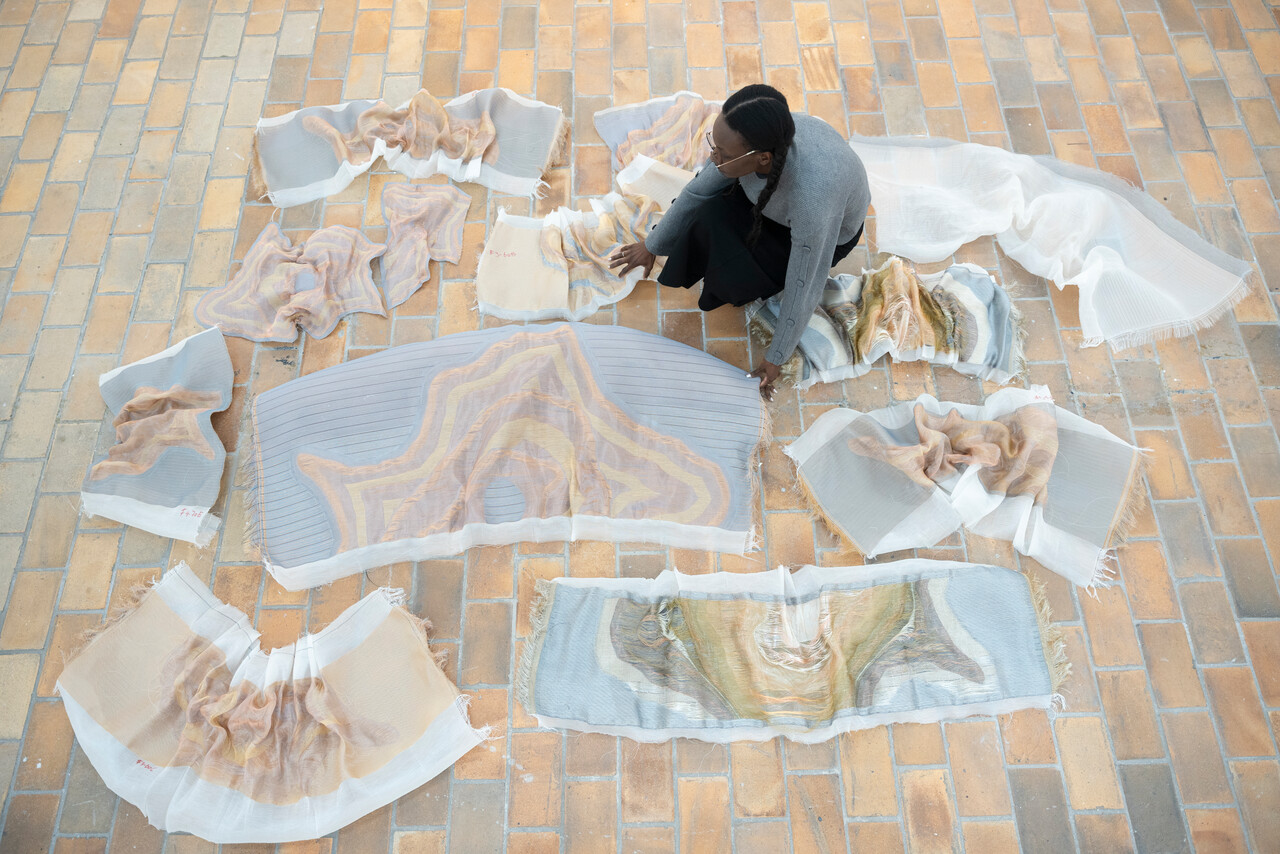
Photo by Patty van den Elshout
Passing on family traditions
This also applies to the memories of Uganda that she carries with her and which are central to her identity. But each time she returns to her country of birth, everything seems to have changed again. And as more and more family members pass away, fewer family traditions are actively passed on. It has sparked a renewed interest in her roots: she wants to honour the knowledge, customs, and practices of her ancestors and breathe new life into their traditions.
Winnow(er)
This was powerfully expressed in the project Winnow(er), inspired by the traditional fan her grandmother left her. The so-called Odero has historically served various practical purposes, but is also used in special rituals. She inherited the fan, but not the knowledge to make one herself; to learn this, she trained with Ugandan weavers from the Langi community. To prevent the memory of her ancestors and the meaning of their objects from being lost, she used this age-old craft to create new, meaningful sculptures. She followed the same principle when working on the commission for the TextielMuseum.
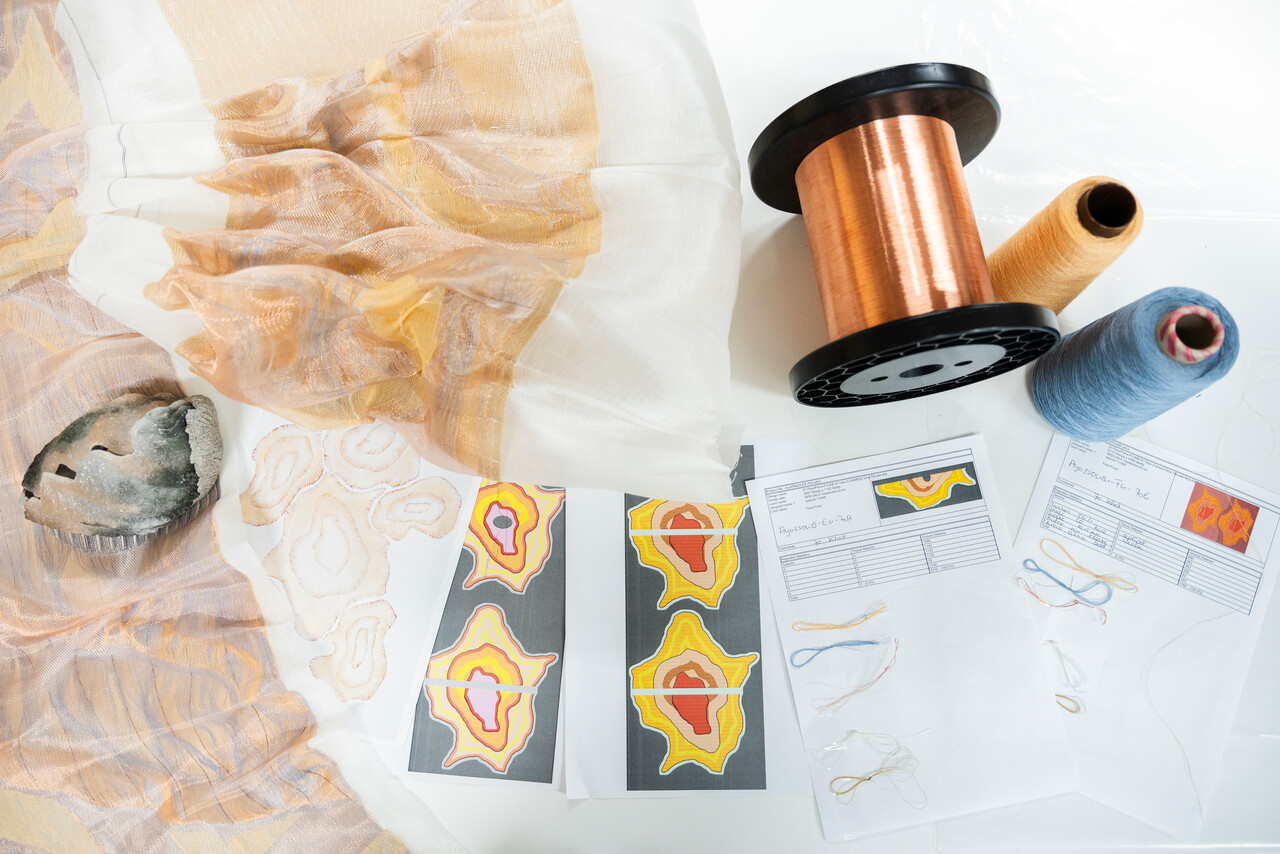
Photo by Patty van den Elshout
African identity
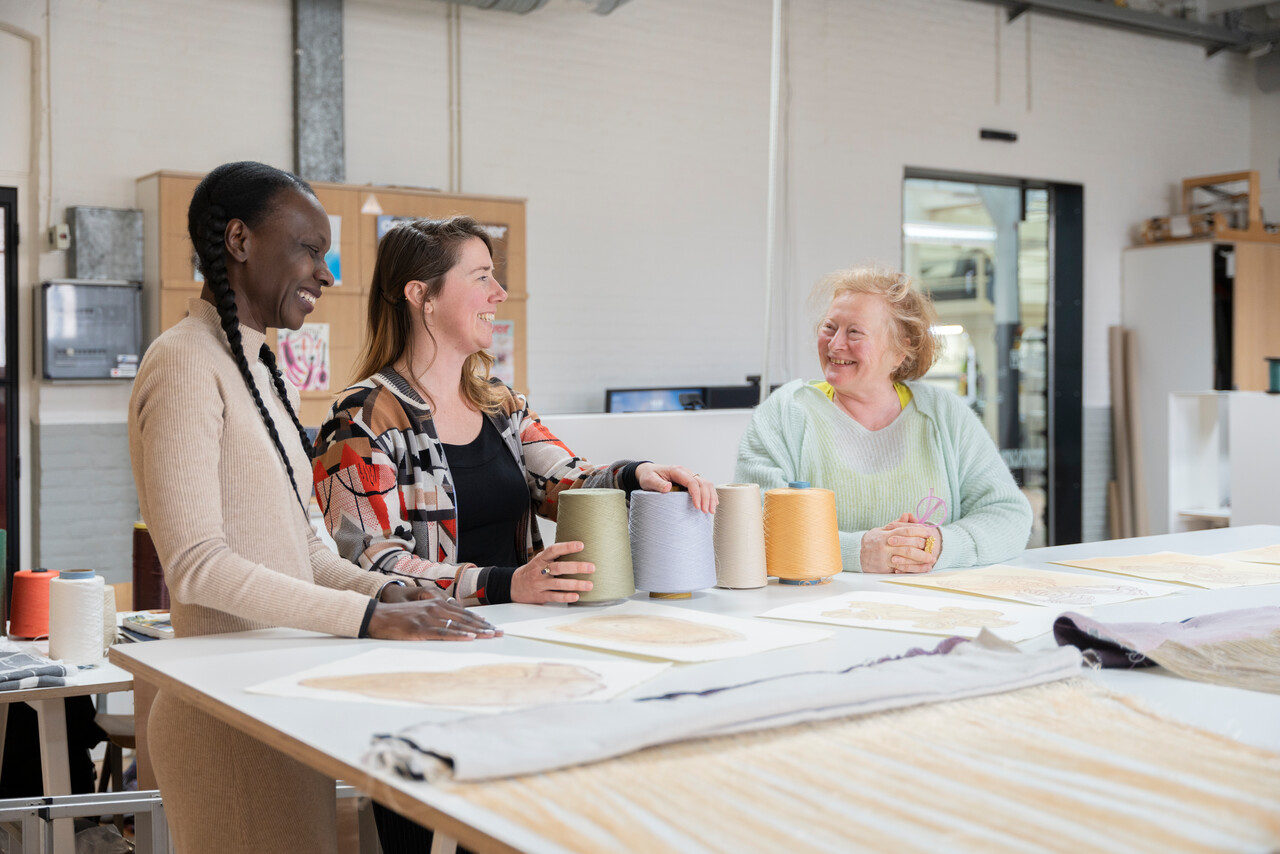
Photo by Patty van den Elshout
Neither Rhythm Nor Repetition
The final work became an installation of woven textiles that draw attention to the cultural context that has been — and continues to be — erased by trading companies such as Dutch textile firms. “I see it as a way of reflecting on the disastrous consequences of extraction and appropriation,” Ayo says. With this work, she wants to commemorate what has been lost and spark conversation about it. She stayed close to her personal history, both in design and technique: “After Winnow(er) I really wanted to weave again, but after researching the Driessen family collection I had my reservations about weaving on an industrial machine. I was very happy with product developer Judith Peskens, who brought the human element back into the process. She understood very well what I wanted and acted as a bridge between me and the machine. Because of that, it was less alienating than I had expected.”
The search for a balance between the embodied rhythm of handwork and the mechanical repetition of the machine is captured in the title: Neither Rhythm Nor Repetition.
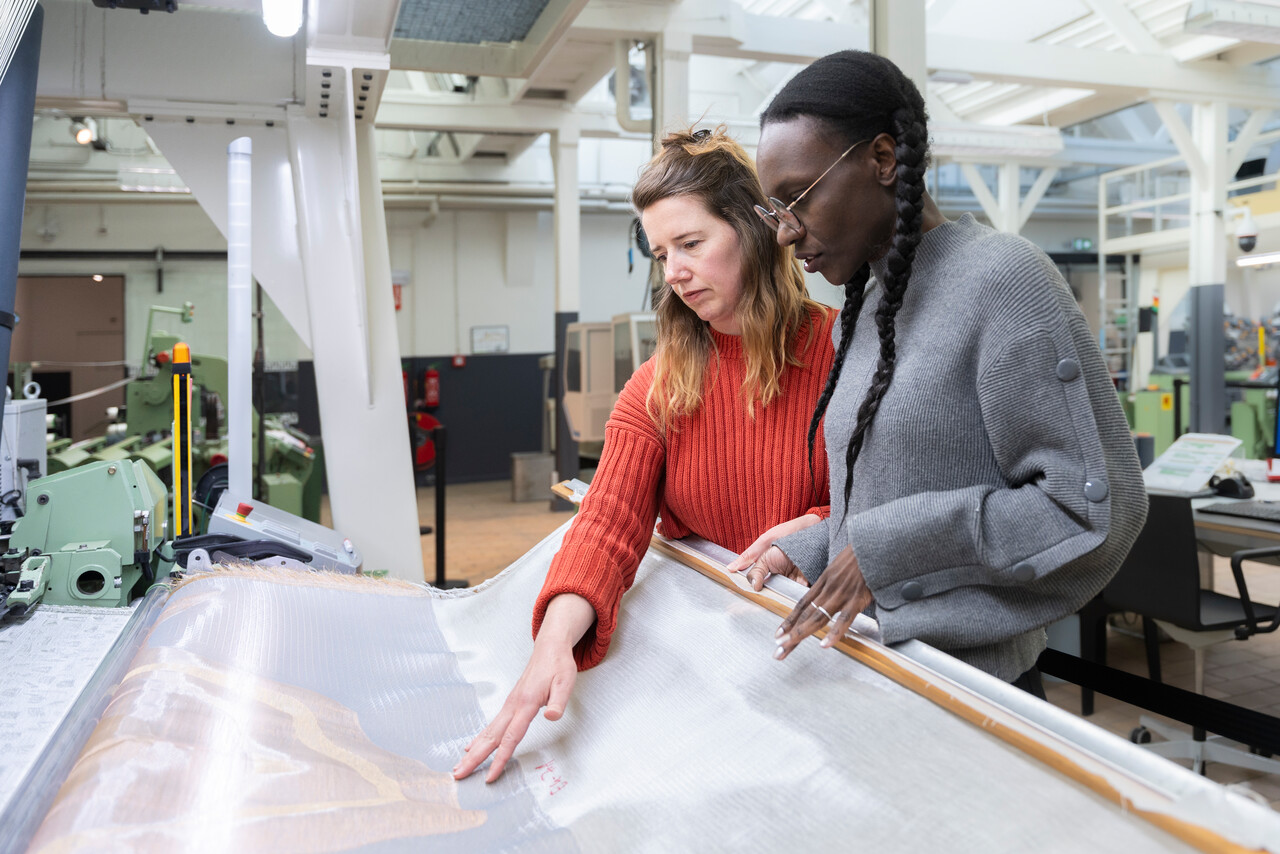
Photo by Patty van den Elshout
Cowrie shells
The patterns of the well-known wax prints, which the West still seems to regard as “typically African”, have in her installation been replaced by cowrie shells. These shells were used as a form of currency for centuries in Africa and Asia, and they continue to play a role in African rituals. This is referenced through woven motifs in a large wall hanging and cast glass forms placed within 3D-woven draperies on the floor. The floor textiles depict Fort Jesus from a bird’s-eye view; this 400-year-old fortress in Mombasa (Kenya) was fiercely contested from the 17th to the 19th century because, as a gateway to East Africa, it served as a strategic trading post.
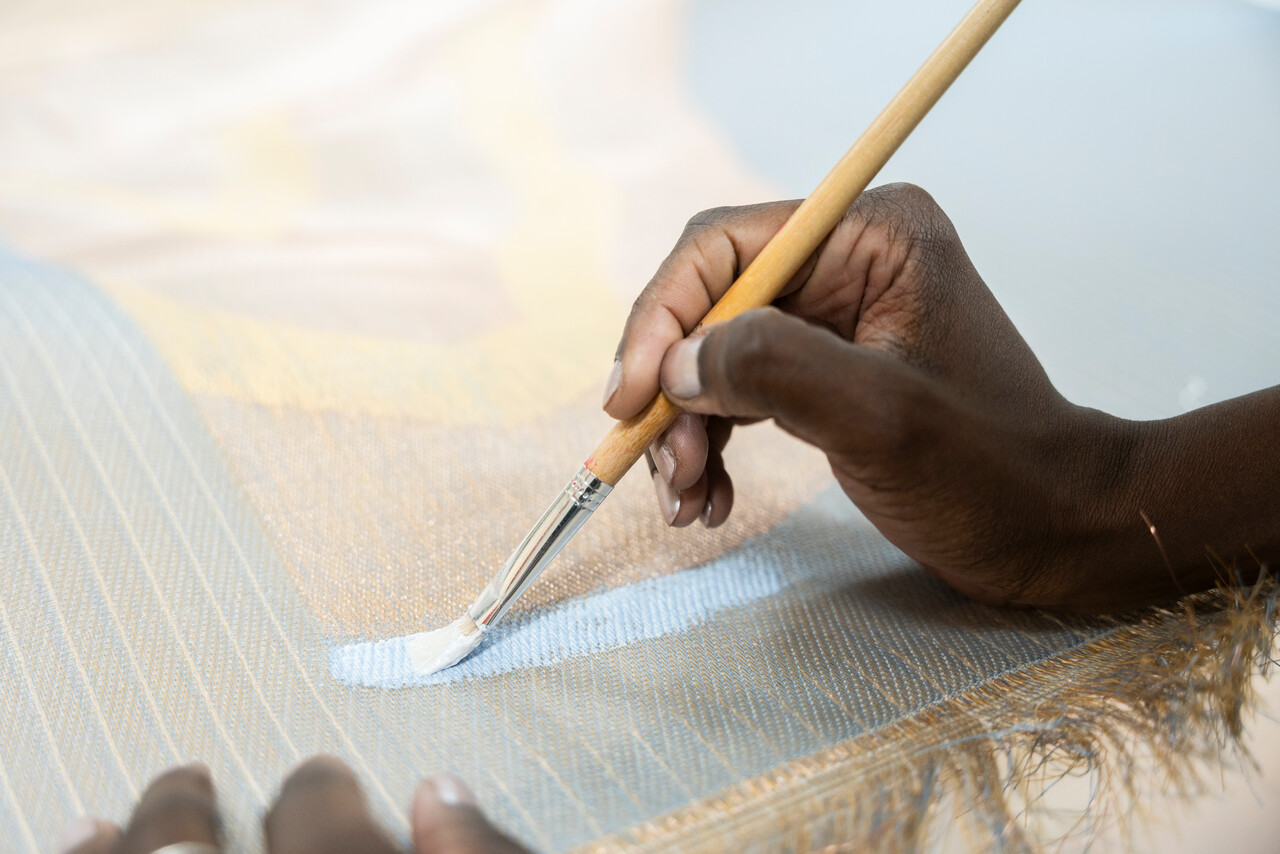
Photo by Patty van den Elshout
Fort Jesus
“Fort Jesus is the architectural witness to the complexity of cultural exchange and connection,” says Ayo. “Arabs, Britons, Portuguese and Persians all fought to gain control of the fort, purely for economic gain, without giving credit to the origins of that wealth.” The carefully chosen sunset colours of the hanging textile mark the end of this era.
Ayo continues: “The sunset symbolises the letting go of old ways of thinking, and the new beginning we must face together.” The sounds emanating from the glass shells reinforce that sense. Ayo recorded ambient sounds in Mombasa, Zanzibar and northern Uganda, which she interwove with a litany on the various meanings and uses of textiles in the lives of Indigenous makers.
Text by Willemijn de Jonge
This collection commission was realised with the financial support of the Mondriaan Fund.
Stay tuned
Subscribe
Where designers collaborate on innovation, there is a lot of news to get. Subscribe to the newsletter and get automatic updates on special projects, discoveries, events and open calls.
Share with friends