

Project Space: capturing the magic of the TextielLab
22 April 2026
At the heart of the TextielMuseum, the TextielLab is alive with activity: a dynamic space where artists and designers collaborate with textile specialists to shape the future of textiles. Walking through the lab, you feel it instantly — it vibrates, hums and pulses with energy. The scent of machine oil hangs in the air, while a vibrant mix of coloured yarns sparks the imagination. Yet the true gold of this place — the constant experimentation, testing and development — has long remained hidden from visitors. The museum’s new exhibition space, Project Space, is changing that.
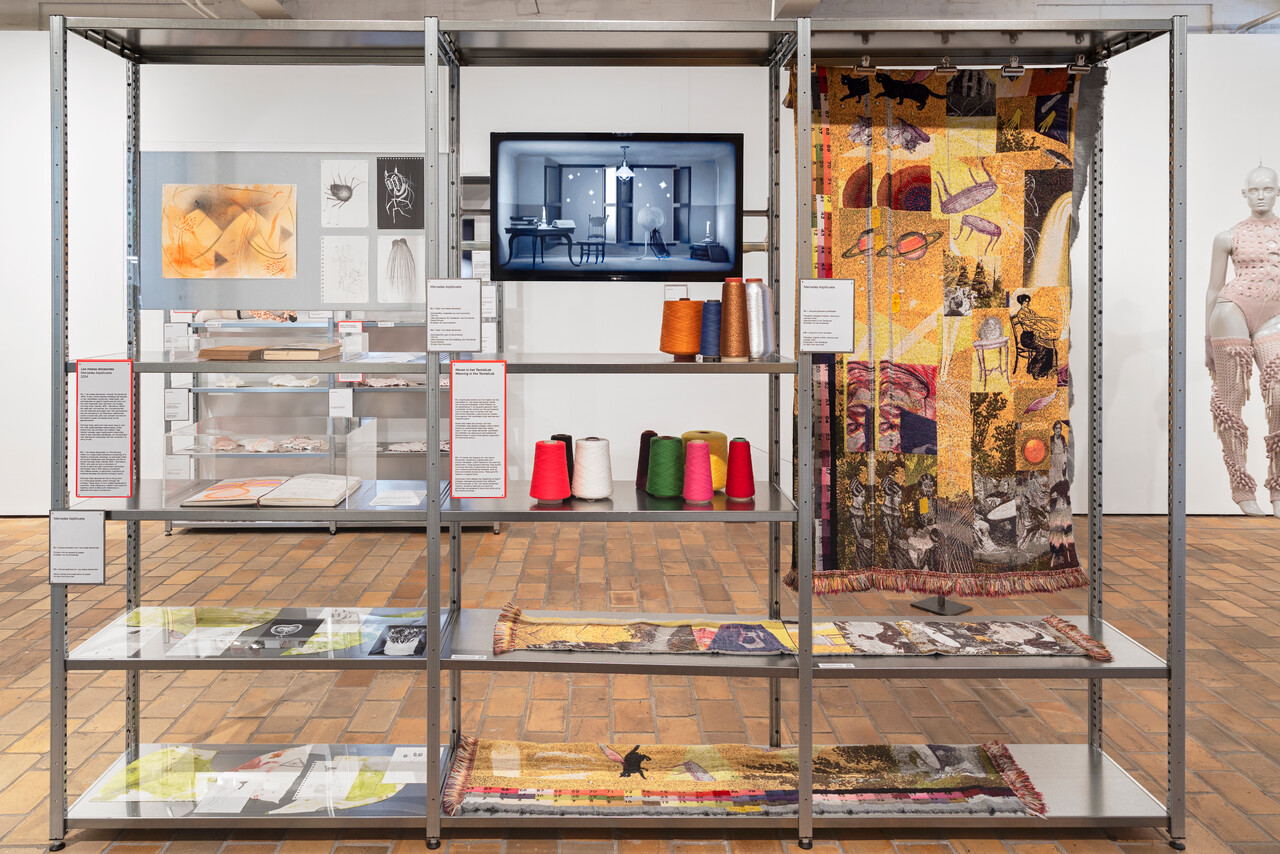
Whoosh, whoosh. After the overwhelming soundscape of the TextielLab, Project Space offers a moment of calm. The exhibition space is located directly adjacent to the lab, at the back on the left, separated only by a glass sliding wall that glides open and closed almost silently. It officially opened in February this year, launching with work by Dutch-Japanese artist and fashion designer Lisa Konno and Argentine artist Mercedes Azpilicueta. Rather than showcasing finished pieces, the focus here is on the creative and experimental processes that led to them.
Understanding what drives the maker
Adelheid Smit, curator at the TextielMuseum, curated the first edition of Project Space. “The TextielLab is internationally known as a place for experimentation. It produces truly boundary-pushing work in the field of textiles — which in itself is already remarkable,” she explains. Yet much of that pioneering work remains invisible to the public. And that is a loss, she argues. Understanding the steps required to reach a final outcome adds depth and meaning to the work itself.
“In Project Space, we reveal how an initial idea from a designer or artist evolves into a final work. And that is always a co-creation: together with our product developers and technical specialists, creative makers continuously push each other further. Each person’s expertise plays a role in achieving something truly exceptional.”
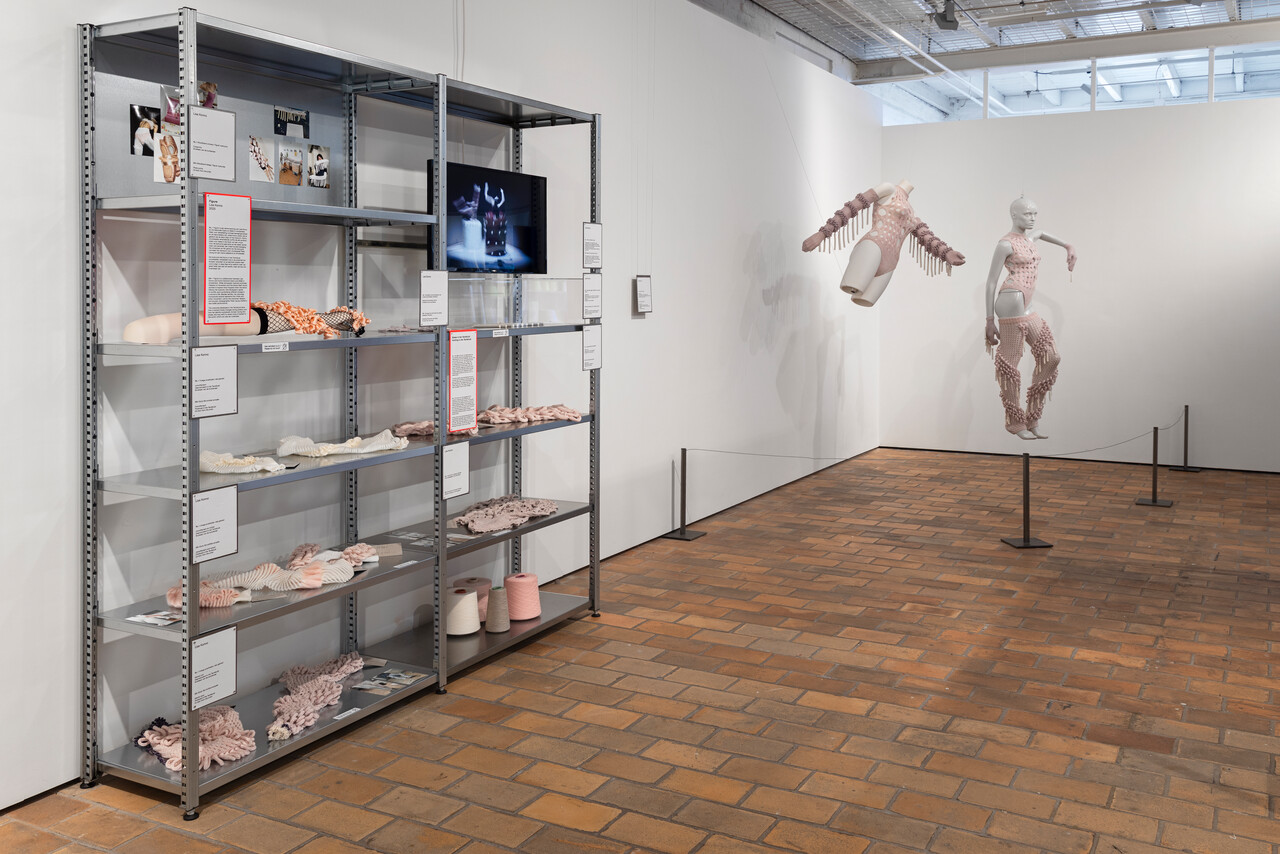
Photo by Josefina Eikenaar
Adelheid walks over to the display structure where Lisa Konno’s design process unfolds. “In these photographs, you see the very first prototypes Lisa assembled in her studio: sleeves fitted with elegant ceramic pendants she created at EKWC.”
For the dance costumes she was developing — in collaboration with choreographer Peter Leung of the Dutch National Opera & Ballet — Lisa had a very clear vision. The knitted material needed to be soft yet flexible, allowing it to wrap seamlessly around the dancer’s body.
“With the samples in the exhibition, we follow Lisa’s search step by step,” Adelheid explains. “And you really see how precise and demanding such a development process is.” She points to a knitted sleeve with loops. “These knitted pleats fascinated Lisa, but they didn’t match what she was aiming for: a sturdy loop capable of carrying ceramic cones. So the process continued — testing further with our product developer Sarena Huizinga — until the desired result was achieved.”
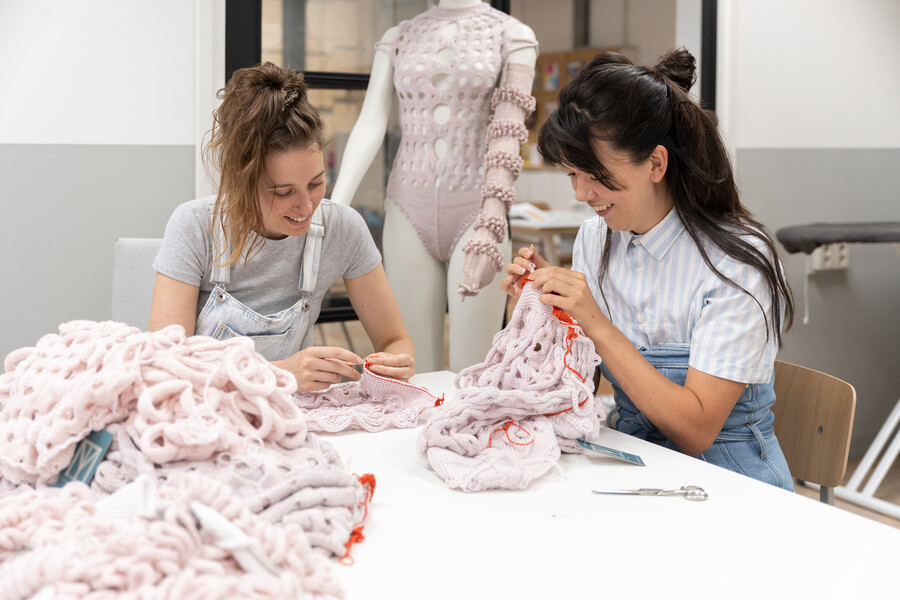
Sarena Huizinga (left) and Lisa Konno (right). Photo by Josefina Eikenaar
Depth through experimentation
Artist Mercedes Azpilicueta worked in the TextielLab on a wall hanging — part of a larger installation — paying tribute to spiritualist and women’s rights advocate Amalia Domingo Soler. The collage-like tapestry shines in Project Space: its vivid colours and intriguing imagery immediately draw the eye. Adelheid explains: “Colour and material set the tone for the story this wall hanging tells. Together with our product developer and yarn specialist, Mercedes explored ways to translate her highly imaginative visual language into textile form in a powerful way.”
Part of the narrative woven into the piece revolves around séances — the summoning of spirits — organised by spiritualists in the 19th century. “Mercedes was looking for a way to give the tapestry a sense of magic, and the right material was essential for that.” Adelheid points to a large spool of transparent viscose. “In the end, she used this yarn to render certain images almost invisible within the work. They become translucent, like ghosts. And this metallic, bronze-coloured yarn adds a shimmering effect to the whole piece.”
“It’s very special that we can now show this development process — which normally happens behind the scenes — here in Project Space.”
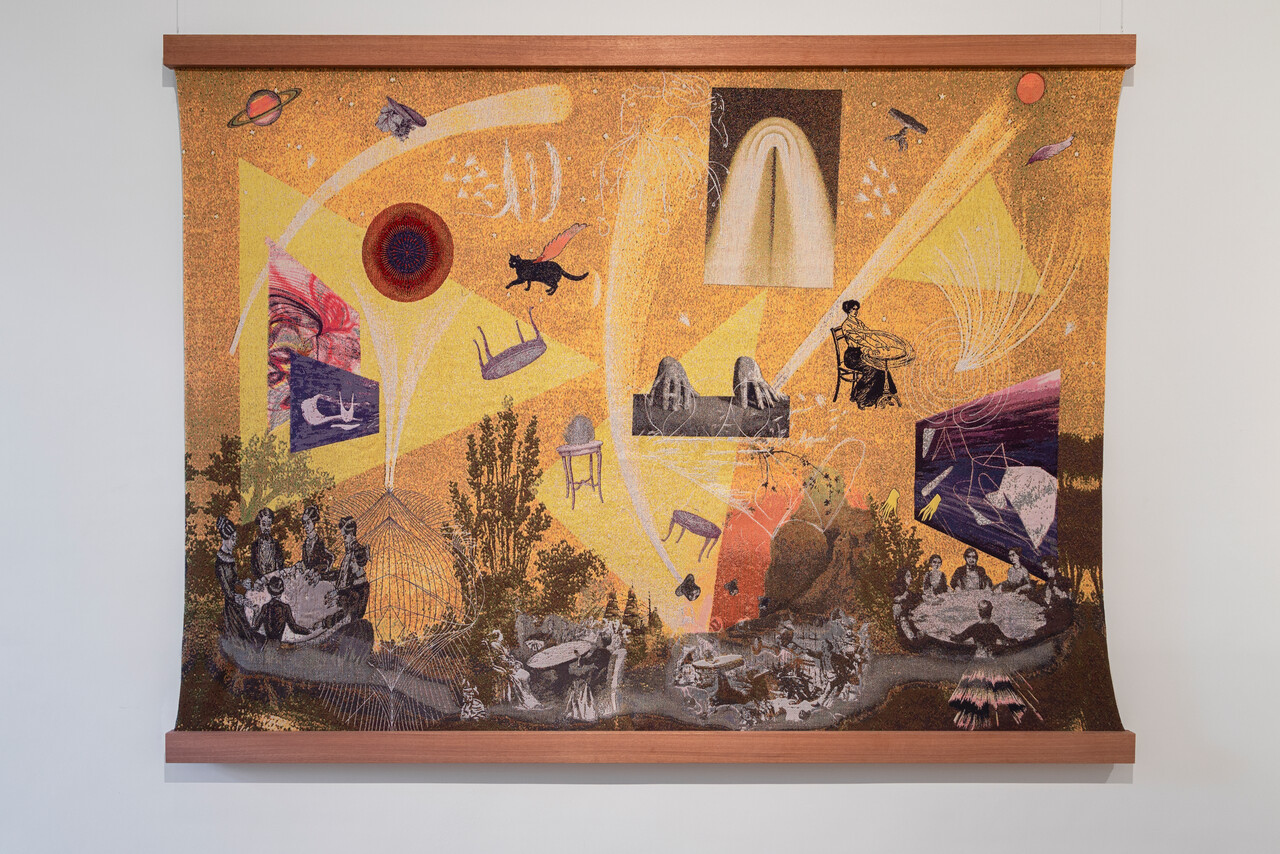
Photo by Josefina Eikenaar
The magic of making
The exhibitions in Project Space change more frequently than those in the other galleries of the TextielMuseum. “So much happens in the TextielLab. Because we programme Project Space more flexibly, we can also respond more easily to what’s happening in real time: for example, Lisa’s costumes were produced over the past year and were still being worn on stage just a week before the opening.”
From artworks in our exhibitions and collection to large-scale, high-profile commissions such as the textile walls in the LocHal or the curtains for the Royal Palace Huis ten Bosch, it is often difficult for visitors to imagine that these works are actually made in the TextielLab. “I hope these exhibitions will further spark visitors’ appreciation for textile craftsmanship and experimentation. Because it is precisely in the making process that a crucial part of the magic of textiles lies.”
Curious? The working processes of Mercedes Azpilicueta and Lisa Konno can be explored in Project Space until 17 May. From 23 May onwards, designers Simone Post and Kiki van Eijk will take centre stage in Project Space.
Written by Iris van den Boezem
Stay tuned
Where designers collaborate on innovation, there is a lot of news to get. Subscribe to the newsletter and get automatic updates on special projects, discoveries, events and open calls.
Share with friends